Feeds:
Posts
Comments

Archive for the ‘The Bible’ Category

Bible Origin

The bible is not a single book, but a collection of books and letters from various writers whom God’s people have recognized as inspired by God.

While writing has been around since cavemen, it has only been available to the general population since the invention of the printing press in the year 1436.  

Before then it was done with difficulty, by hand, expensive, guarded, and preserved as precious.  Special scribes were trained to ensure copies were correct and protected from error.

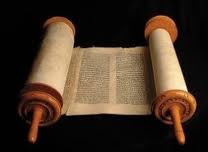
Over the centuries the Jewish community had combined these writings into three groups, each with its own characteristics. These are the Law (Torah), the prophets (Nevi’im), and the “Writings” (Ketuvim), a collection of poetic books, wisdom books, and additional narratives.

These were the Bible early believers had, including Jesus, and the Apostles, themselves.  The Hebrew scriptures had also been translated into Greek, called the Septuagint (LXX).

Shortly after the resurrection of Jesus, people were writing accounts of his life, called “Gospels”, claiming those were written by the Apostles, but not all were authentic.  

Around 140 AD, a man named Marcion of Sinope pulled together a list of “Gospels” and letters from Paul he said were inspired.  But here was a problem, they were only the letters supporting his own particular point of view, which many in the church disputed.

God’s people needed to agree, collectively, which writings were authentic, and they held several church wide conferences for this purpose.  In 397, at the Council of Carthage, the 27 writings of the New Testament were adopted.  Around 400 AD the bible was translated into Latin, and in 1380 it was translated into English.  In 1611 the King James version was published.

We no longer have the original manuscripts, the materials used just did not endure.  All we have, now, are copies and not all the copies are exact.  A few minor words and passages are missing or added in the copies we have discovered.

Why wouldn’t God see to it that the originals were maintained, and why did Jesus, himself, only write on sand (John 8:8)? It is not said, but I have my ideas.  

Had Jesus written anything down, or if the original manuscripts from the apostles endured, people would worship them instead of Him.

It is not a artifact but a person who is valued. The copies we have are enough to convey the message.   We receive his written words and worship the Living Word, Jesus, who opens the word to us.

Read Full Post »

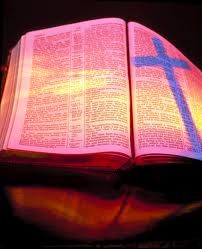
Bible Opened

All Scripture is given by inspiration of God, and is profitable for doctrine, for reproof, for correction, for instruction in righteousness, that the man of God may be complete, thoroughly equipped for every good work”

2 Timothy 3:16-17

The Apostle, Paul, pointed his protege, Timothy, to “the Scriptures” as the source of faith, encouragement and correction.  We know these scriptures as The Bible.

The next three Wednesdays I plan to focus on the Bible itself.  Where it came from, how it can be applied and correctly understood

What is the very first thing that has to happen when you want to know what’s in the Bible and what it means? 

It has to be opened; opened not just to see it and read it but opened to your understanding.  Before then, it is just a disjointed, isolated, collection of stories and letters other people have quoted. And the quotes are often confusing, contradictory, and not making much sense.

Seeing something is more than its light hitting the eye; there needs to be mental activity to understand what is seen. It has to be into context.

where's waldo

Ever been in a crowd of people and suddenly recognized someone you knew?  What a shock.  They went from being a faceless person to a good friend.  They hadn’t changed, you changed.

The Bible is like that, just words on a page until something happens.

That something has nothing to do with intellect; a lot of smart people are clueless when it comes to the Bible.  To others, smart and simple, those words touch something deep inside and make perfect sense.

After his resurrection, Jesus had a message for his followers:

Then Jesus said to the disciples, “When I was with you before I told you that everything written about me in the law of Moses and the prophets and in the Psalms must be fulfilled.” Then he opened their minds to understand the scriptures.

Luke 24:45

The first step in understanding the bible is to ask Jesus to open it to you like he did to the disciples.  Don’t tell him what the Bible means, let him tell you.  Tell Jesus you want to know the truth and will accept what he shows you. 

Thank you, Jesus, for offering yourself on the cross for my sins, my pride, my self-sufficiency. Thank you for leaving my sins there, in the grave, when you rose from the dead.

I surrender to you and want to know your book, the Bible. Please open the scriptures to me like you did to your disciples. Let the scriptures come alive to me as I read them, fresh, again.

Amen

Read Full Post »

“But we know that the law is good, if a man use it lawfully” – 1st Timothy 1:8

Interesting phrase – using the law lawfully – implying, of course, the law can be used un-lawfully and not be good.

Proclaiming “Our Creed is the Bible” just isn’t enough.

Though the Bible is now available in our own language and, for many of us, free to use as we may choose, it’s not helpful unless used correctly.

So how does one use the law lawfully?! Hmmm…

Using the law (indeed, all parts of the Bible) lawfully will:

  1. Be Christ centered – see how the Apostle Paul quotes from the law, substituting “Christ” for “Commandment”.(1)
  2. Encourage living God’s kind of love in good conscience and with an open/honest faith. (2)
  3. Bring life in the hearers – Jesus said he came to bring abundant life.(3)

It’s our enemy who steals, kills, and destroys, so we should agree that using the Bible to steal, kill, and destroy is a misuse.

Yes the Bible is used to correct sin and error, but God’s correction applied correctly (law used lawfully) brings hope.

– fritz
1 – Romans 10:8 / Deuteronomy 30:11-14
2 – 1st Timothy 1:5
3 – John 10:10

Read Full Post »

Older Posts »